
Personal Story
Her Service, Her Story: MWO (ret’d) Patty Smith
Patricia “Patty” Smith shares her story of almost thirty years in the Canadian Armed Forces, the injuries nobody saw, and her hope of helping the women who serve after her.
Written by Patricia “Patty” Smith
Back to Personal Stories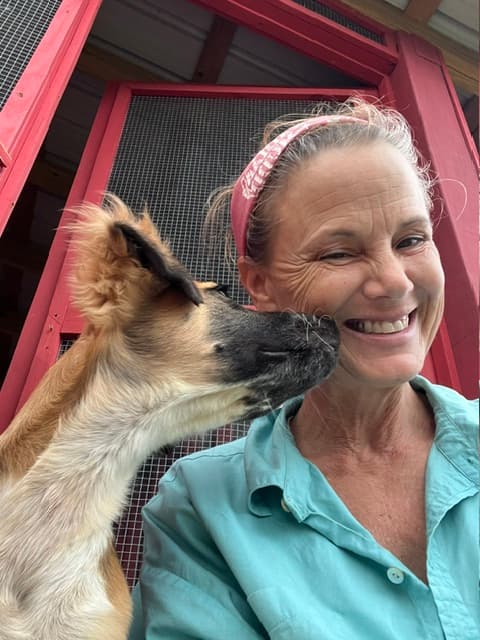
My official name is Patricia Smith, but I’ve gone by Patty since I was a kid, and this is my service, my story. I spent almost thirty years in the Canadian Armed Forces - Army Reserves, Army Regular Force, a brief stint in the Air Force, then back to the Army. Artillery first, then logistics. Supply tech. Material management technician. Whatever they decided to call us that year. It was my life. Literally my whole life.
I didn’t join because I had some grand plan. I joined because I wanted to blow shit up, and in my hometown, girls weren’t allowed in the reserves yet. They said I could only be a secretary so I chose to wait. When they finally opened the door, I walked through it. At first it was a part-time job, then it was a full-time job, and then it was a nightmare, so I left. I rejoined but I was married at the time. If I wanted to follow the guy I thought I loved, I needed to be what they called a purple trade so that I could be posted anywhere. I entered into Supply. They always pissed me off so I went into it thinking maybe I could change things.
I served everywhere. Domestic operations, field exercises, disaster response, deployments. Sent to search for a missing toddler in the middle of winter. Earthquake in Turkey. Bosnia was a big one - post‑war, but still full of landmines. Half a million of them scattered in fields. My job was to drive an officer around who couldn’t read a map, trying to find places to park eighteen giant tank self-propelled guns. So there I was in an Iltis with less armor than my Jeep today, driving through fields like a minesweeper. Nobody was shooting at me but that doesn’t mean that it still wasn’t a shit time.
I joined the reserves ’92 and transferred to the reg force in ‘97. Released in 2002. Rejoined Air Force Supply in 2003, that led into Army Supply. Left again in 2021. Almost thirty years. I don’t remember all the dates anymore. My brain doesn’t hold things the way it used to.
The Injuries nobody saw? Nothing was ever diagnosed as a brain injury. Not once. But I know now what I didn’t have words for then.
My first big hit was in the reserves doing my Master Corporal Leadership course. We were playing “Up He Sees Me Down,” and I dove into a bog with a C9 under my chin. Smacked my head hard and saw stars. When the course was finished, I went to the hospital a week or two later. They said that I definitely did something to my neck but chalked it up to whiplash, gave me Flexerol, and then sent me on a driver’s course where I slept most of the time.
It was the constant impacts. The repeated ones. Smashing my head off driving turrets while driving APCs. Fucking smacked my face. Frankly, I can't believe I've got my own teeth. Getting a couple‑hundred‑pound camouflage net dropped on my head. I carried the heavy weapons when the men didn’t want to. I broke my leg - fractured it running in combat boots for months on end. They told me to change my boot bands when it was a broken leg! Being too far forward of the guns when they fired. The blasts, the shockwaves, the tinnitus that still rings in my ears. I’ve been rocked more times than I can count. And when they upgraded the helmet, that was the worst thing ever. That thing was so heavy, placing more stress on my neck injury. I was eating Tylenol like candy and taking epsom baths as often as I could. It affected my day-to-day service. But you didn’t complain. You sucked it up. You shut up. You didn’t whine. That’s what I heard for decades from others, and eventually from myself.
I lived with chronic neck pain for years. Still do. I lived with headaches. Still do. I lived with dizziness, nausea, and food issues that I never connected to anything. I lived with cognitive problems. Losing words, forgetting questions mid‑sentence, starting one task and ending up doing something completely different. I thought it was Alzheimer’s. My grandmother died of it, so every time I couldn’t think of a word, that’s where my mind went.
When I hit my head and had my neck injury, there wasn’t a great deal of support. I didn't get time off when I needed it. Nobody ever looked at it or even did an x-ray. Every once in a while they’d go, “Here are some pills.” For God's sake, to think, “Hey, maybe it's not just whiplash. Maybe she's not just a whiner.” - but no. I did a year and a half with three broken ribs that went undiagnosed. I told myself I was fine and kept pushing through.
I knew when I was getting nauseous every day on the way to work that something was desperately wrong and I needed out. That was long before I had any words, clues or inklings as to what was actually wrong with me. I had to come up with excuses or ways out of doing certain things without looking like a slacker. I worked my entire career to not look like that. It was a fucking struggle just to keep going. I would go on month-long field exercises where I just wanted to fucking die because I couldn't turn my neck anymore. And that's a problem when you're driving a tank. I relied heavily on crew commanders to do shoulder checks for me as I didn’t want anyone to see the struggle.
It never occurred to me that these were symptoms of brain injury. It never occurred to me that it could be a brain injury. If they couldn’t diagnose broken ribs, how were they ever going to diagnose a brain injury?
I couldn’t go into the medical system. My God, that was considered the greatest sin and was highly stigmatized. There most certainly was no going in for mental health help. In the past, I used to make fun of people for that. Yes, it was horrible, but that’s what the boys were doing, and I so desperately wanted to be one of them instead of standing out. In reality, all I wanted was to just do my job. In the combat arms, if you went into medical for something that wasn't an obvious, visible, open fracture, it was seen as, “How dare you!” Dealing with the amount of stress that I was, I can't believe how I wasn’t in total shutdown. But at the time I was in my twenties, so I could keep going. These days I might last about two days, not two decades.
I was being both physically injured by service and a figurative punching bag for many people. How do you get help? How do you even know you need help? Unless someone pointed it out, 90% of my horrible stories were simply anecdotes - until I saw the look on people's faces. I wonder if I went too far? The stories I've told are quite shocking to many, but that is my life. That was my life. Everything hurts and it's been really bad for a really long time.
There is one incident from Bosnia I still carry. An officer ordered me to drive through a field with mines everywhere. A pack of dogs came running out of nowhere. With no way to avoid it, I hit one.
I don’t do well with injured animals. I woke the next morning and couldn’t turn my head. To cover, I told them I hit a bump. Maybe it was the roads. Definitely stress. Add the trauma. The guilt. The pressure of being a woman who couldn’t show weakness. The fear of saying “no” when I didn’t have the rank or power to say it.
I rescue dogs today. It’s part of my retribution, I think.
Being a woman in uniform, I needed to stay where I was rather than actively going for something I actually wanted. I certainly was never encouraged to try new things. It was always “We need this ____ (whatever derogatory name they’d call me) in this unit. You can't leave because that would affect our numbers. We've told the public how great we're doing so we’re going to show them.” I was a PR whore for years. I was their token female, in front of every fucking camera and in the news. They touted me out a lot to show how forward the CAF was, that they had a woman in the unit. We had a gun race team and I was the first girl doing it. “Look at that, they've got a little girl out there!” I literally heard that in the air show over the loudspeakers.
I was part of a unit that was made up of ex-paratroopers that were disbanded. Knowing what I know now I would not put up with 99% of what I put up with, regardless of rank. Back then you shut the hell up and took it. I was called every name in the book. Split‑ass (a term that disparagingly refers to female service members referencing their buttocks that continues around the front to the vagina). Ground sheet (a term that degrades a female soldier by objectifying her as something meant to be laid on or used on the ground, functioning as a crude sexual double entendre). Another was the opinion that girls were only good for fucking, as there was no way we could be any good at army stuff.
I walked into the Reg Force with a harassment suit already behind me - one that went in his favour, not mine. Rumours preceded me everywhere: “Be careful, she’ll have you charged.” The pressure was relentless. I didn’t want to be “that girl.” I didn’t want to be seen as weak. I didn’t want to be dismissed as emotional or dramatic or a problem. So I pushed twice as hard. Maybe three times. Maybe more.
There were 900 men in the unit. As one girl, what was I going to do? Actually, there were three girls at the time but they split us all up so that we were in different parts of the unit - we couldn't band together. I had to outperform at about 200% to be three quarters of good - because nobody wanted these split asses around. I had to prove that we were worth something.
I didn't want to be “that girl.” I just wanted to be a soldier. I wanted to be the job. That was my identity. However, I don't want women coming into the Forces feeling like they have to do or be that. I used to struggle, and still do - to see stuff online about girls and women - how they've got their nails and hair done, and they look smashing. I questioned if I was jealous, but I think it came down to the old Sergeant Major screaming to put my hair in a bun. I hated seeing women who looked pretty and girly, but honestly, what it really came down to was women hating women. We didn’t just have to outdo the men. We had to outdo the other women too, but it went farther than that when women vilified other women for basically, being a woman. We needed to fit in so badly that we became our own worst enemy.
I came in from the reserves and had received a lot of courses that were difficult to get if you were in the Reg Force. I came into the unit well qualified. I knew my shit and they hated me for it. I can’t deny that I liked it when I did really well and outshined them. But therein laid the conundrum. I was getting promoted and while I wanted to show up the boys, I also didn't want to. I didn't want to outdo them and fuck up my whole world. You got shot in the back that way,or left in front of the guns where you're in the blast zone. There were all kinds of ways for them to get you, but not get you. There are unspoken rules. If you were going to get screwed over by a team, you knew what would be coming.
I mean, I didn't get taken out back of the guns and beaten up. They didn't do that to the girls at the time. Honestly, I came out of the military and told a therapist. "Hey, at least I made it through without being raped.” And I stopped and looked at her and said,”Oh my God, who fucking says that about their lifetime career?” I was appalled but also, I said, “I don't understand why I wasn't. I don’t understand why I wasn’t hazed or mistreated more than I was - for being a girl, for being qualified, for taking jobs. And simply being a nice person.
The breaking point came near the end of my career. I was posted to Halifax and thrown into a role that should have been for a Corporal. I was a Master Warrant Officer. I didn’t have the skill set for what they needed and it was overwhelming. My forte was logistics. My ability to multitask - the thing I was known for - was gone. Completely gone. I couldn’t manage work. I couldn’t manage home. I couldn’t manage myself. I blew out. Medical release. I had to go away from work because I couldn’t handle it anymore.
I got my retirement and my thank‑you from the Prime Minister in the parking lot of a Tim Hortons - because I refused to go back into the mess hall. The same place where a naked photo of me had once been shown around. The same place where some men laughed at me, humiliated me, dismissed me, minimized me, and made me feel like a problem for my entire career.
That was the end of my service. In a parking lot. With certificates handed to me like an afterthought.
What stayed with me were the injuries that came back with me. The headaches. I wake up with them every day. The neck pain. The cognitive issues. The stress responses. The driving anxiety. The inability to turn my head. The pain of wearing helmets. The tension. The overwhelm. The internal voice that still tells me I’m not enough. It's affected much of my life. Driving abilities. Driving makes me very tense, which probably has a lot to do with driving that Jeep - and now I'm driving a Jeep in similar standards and fields. I couldn't buy a motorcycle for years because I couldn't wear a helmet. I heavily researched and paid a lot of money for the lightest helmet I could find. Yet even now there are days I know I can't ride. I can't put the helmet on or hit any bumps otherwise I'm doomed. What happens is I lock up, I can’t turn, and I can't look to the left.
What stayed with me is the dismissal. The feeling of being minimized, misunderstood, and ditched by the very people who were supposed to be my family. Those ‘very good friends’ that I had never called while I was home and off work. It was so disheartening.
I completely lost who I was, or felt that I never really knew who I was to begin with - I just played different roles because I had to. I don't think I was ever afforded the opportunity to get to know myself. I was expected to do things, and I did it. Or I wasn't expected to do things, and despite them, I did it anyway.
Service cost me most of my health. Service cost me a couple of marriages and much of my family. They didn’t like the after effects and what service turned me into. I parted ways with most of my family. I don't talk to them - I can't. I'm just getting right with that in my head now. I nearly lost everything. I've had a few breakdowns along the way and it was just a lot of, “We'll send you into a therapist for ten sessions. You'll be fine.” I didn't even have the words to say what the fuck was happening at the time, so I feel like none of that much mattered then. Now I really am trying to process it. Understand why it pisses me off so much to this day, and wondering if it always will. Releasing was a non-event but it was huge in my mind. I couldn't believe it because this was my whole life. Now it's just gone and done.
What I wish someone had asked: “How can I help?” That’s it. That’s all I needed. Not pills. Not dismissal. Not silence. Just someone to ask how they could help.
Since I was a woman everything was just another girl problem that people didn't want to deal with. My whole career was being told, “It's a girl thing, we don't want to talk about it.” Or emotions, “That's girl stuff, go see a nurse.” I/we were misunderstood, to say the least.
Once, my husband hurt me. They resigned it to simply being my issue. When I released, they didn’t have to deal with me any longer. So medically and work-wise, they all dismissed me and said, “Off you go. Good luck. Here are some pills. And here are your certificates” But what they really needed to ask was, “How can we help?”
Where I am now is doing a lot of therapy and finding peace. Therapy saved my life, truly. It gave me language for things I didn’t understand. Therapy has helped me figure out a lot of physiological symptoms that I have. Stress equals my head injury goes haywire and I'm in pain for the next hours, days, or weeks. It's helped me forgive myself for the things I couldn’t control. It helped me see that I did the best I could with what I had.
I’m retired now. I live differently. I think differently. I’m learning to be gentler with myself. I’m learning to let go of the pressure I carried for decades. I’m learning to speak openly about the injuries nobody saw. And I’m learning that my story - the messy, painful, complicated parts - might help other women recognize themselves. We all served differently but the silence, the pressure, the dismissal, the injuries we carried alone - those parts are shared. And I’m finally speaking up and telling it in my own words.
I want to support others and tell them to just keep at it. There wasn't a second opinion in the military. Advocate for yourself. That was never encouraged. Go outside of the military, find a doctor after hours and tell the truth if it hurts. There are ways around the military medical system. That's how I always found out I had broken bones.
My end goal for the military and life is to help people whether it’s someone I know or strangers. I want to leave the place better than I found it. Through Project Enlist, it was the first time I've ever been asked about brain health, or any health in service. I started by doing a survey and went “Wow, that should have been on a fucking medical questionnaire long ago.” Simply asking, “Do you think, or do you suspect, or did you ever smack your head, have you had your brain rocked, ever see stars? How about list any or check off these symptoms.” It would have been helpful if they hadn’t just attributed everything to a woman having her period or demeaning us by chalking it up to something as girly and hormonal. I hope females entering the military or those still there don't have to put up with the abuses that I had to put up with - the complete lack of understanding of women. Besides being viewed as just something in your bed, women are whole persons. We're humans. And that really was my goal in the military all along. I just wanted to be considered a person.
Somebody needs to ask the right questions. Hell, even ask any questions at all! Even today, 99% of people will answer, “I’m fine.” if asked, “How are you?” And I'm absolutely not fine most of the time. Find a way. Find a way to be seen. We need to start being honest with ourselves for one. The lack of information is another. I didn't know - I had no idea that repeated bashes to my head, or that awful fucking weighted helmet we wore was injuring my brain. I may have never been struck by an IED, but if somebody had explained to me that there were other ways to acquire a brain injury I could have done things differently to protect my health. Deep down we know when there's an issue. Somewhere in there we know there's something not right. If nobody gives a shit besides you, that's a problem. So go find somebody that genuinely cares about your wellbeing and don’t stop until you do.
We all served in one way or another. We all want to help - to give back, to have purpose, for it to have meaning. That doesn't just go away when the uniform comes off. I stillI want to help, so if they (Project Enlist) can figure things out from studying my brain after my death, please take it. Or pick my brain apart with surveys while I’m still here. I'll do every survey coming down the pipe because nobody was studying women in the military. Let’s gather this information and get it out to the people and organizations who can effect change. Maybe, just maybe, they’ll start asking these questions as a baseline at entry instead when we’re releasing and just ask, “What is your mental health like today? Do you have a smiley face, sad face, frown face emoji?” C’mon, we can do better, and I'm hoping that this will help do better. My Greatest hope is that I made it just a little easier for the women who joined after me.
If there’s one thing I want to be remembered for, it’s that I did the best that I could with the information and tools I had at the time.


YOU’RE NOT ALONE
Get Support with the OBH Support Line
The OBH Support Line offers free, personalized guidance to Canadian service members, Veterans, and their families affected by brain injury. We’re here to help you take the next step.
Personalized Guidance
Help finding the right care for your needs.
Support for Families
Resources to support someone who served.
SUPPORT MILITARY BRAIN HEALTH
Stand With Those Who Serve.Donate Today.
Help advance brain injury research and support Canadian service members, Veterans, their families and caregivers. Your donation helps those affected by brain injury find guidance, connection and support.