Témoignage personnel
Michael Terry : « Mais je n’ai même jamais eu de commotion. »
Michael Terry revient sur sa carrière militaire de 23 ans, le fardeau invisible d’une exposition répétée aux impacts de blast et aux traumatismes crâniens, et pourquoi il a choisi d’offrir son cerveau à la recherche.
Écrit par Michael Terry
Retour aux témoignages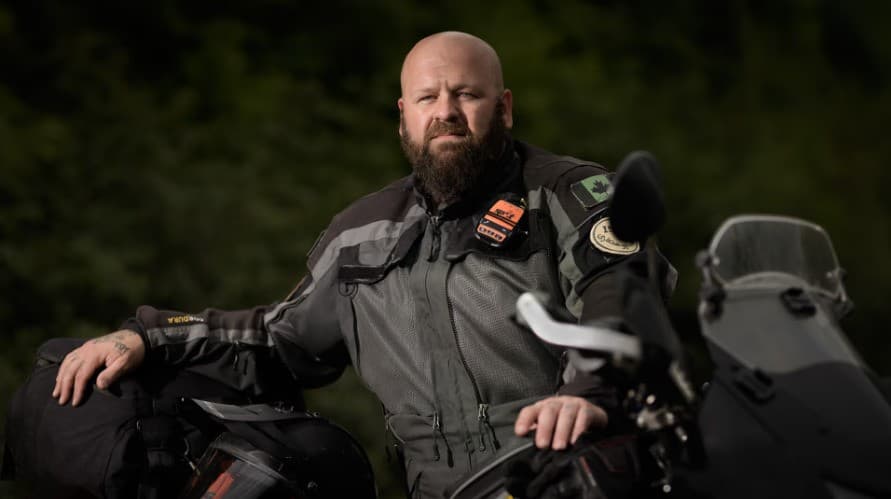
Michael Terry is a 23-year veteran of the Canadian Armed Forces. He retired in 2018 due to complications arising from Post-Traumatic Stress Disorder and immediately began to feel the effects of depression, loneliness, isolation, as well as loss of identity and purpose.
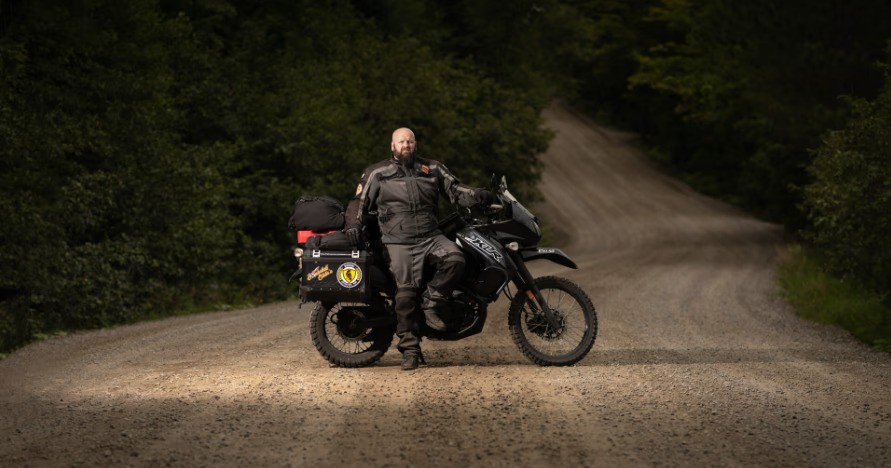
To combat these side effects, Michael began to ride his motorcycle around Canada and to speak openly about his struggles living with PTSD and his challenges transitioning to civilian life. Not only has this forced him to face his own issues head-on, it has also allowed him to continue to serve his community, to challenge himself mentally and physically, to find new passion and purpose, and to begin to heal.
“But I’ve never even had a concussion.”
That’s what I said when my friend Ryan Carey started to talk to me about Project Enlist, it’s what I said to myself whenever the topic of brain injury came up. The truth is, I have never been diagnosed or treated for a brain injury; that doesn’t mean I don’t potentially have one.
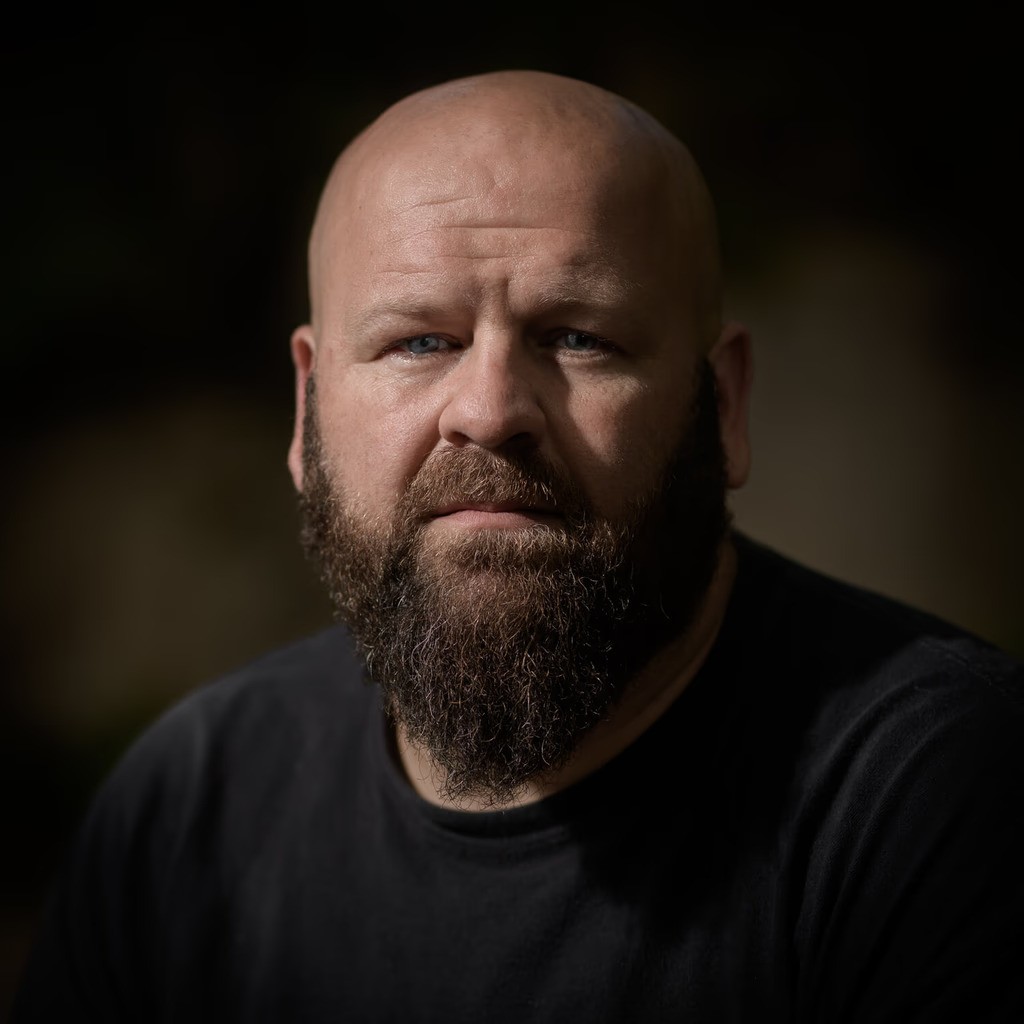
What I do have is a diagnosis of Major Depressive Disorder, Adjustment Disorder and Post-Traumatic Stress Disorder that I received when I was 24 years of age, and a career of 23 years that was chock full of knocks on the head. Close quarter combat training, obstacle courses, rappelling, driving off-road in or on everything from a motorcycle to an armoured personnel carrier, life in the infantry in general, came with getting your bell rung on a regular basis and just soldiering on.
In addition to that is the frequent and sustained exposure to concussive events from weapons and munitions like the 81mm Mortar and the 84mm Carl Gustav recoilless rifle, particularly as range safety staff where you are exposed to dozens of firings per day. All of that tallies up to a soldier’s brain enduring a lot of abuse and, sadly, a great deal of disregard.
It’s important to understand the impacts military life has on the brain, and that is why I have pledged my brain to Project Enlist. As the link between concussion, Traumatic Brain Injury, Chronic Traumatic Encephalopathy and Post-Traumatic Stress Disorder is explored, the next generation of soldiers will have a better understanding of what the military brain is subjected to.
With that understanding, soldiers, leaders and clinicians will be better equipped to properly manage or mitigate the potential exposure to brain injury faced by those who serve.

VOUS N’ÊTES PAS SEUL
Obtenez du soutien avec la ligne de soutien OBH
La ligne de soutien OBH offre un accompagnement gratuit et personnalisé aux militaires canadiens, aux vétérans et à leurs familles touchés par un traumatisme crânien. Nous sommes là pour vous aider à franchir la prochaine étape.
Un accompagnement personnalisé
De l’aide pour trouver les soins adaptés à vos besoins.
Du soutien pour les familles
Des ressources pour soutenir un proche qui a servi.
SOUTENEZ LA SANTÉ CÉRÉBRALE DES MILITAIRES
Soutenez ceux et celles qui servent.Donnez aujourd'hui.
Contribuez à la recherche sur les lésions cérébrales et soutenez les militaires canadiens, les vétérans, leurs familles et leurs proches aidants. Votre don aide les personnes touchées à trouver des conseils, des liens et du soutien.